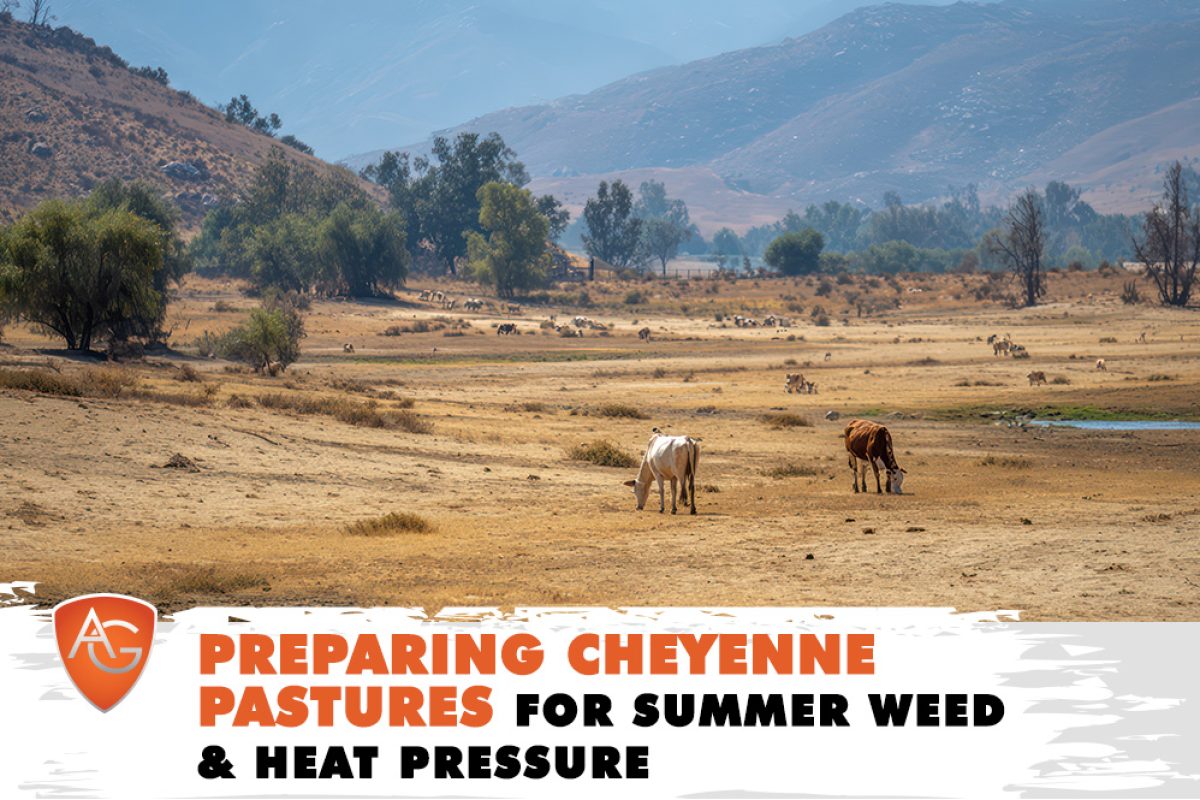
Overview: Prepare Cheyenne pastures for summer weed and heat pressure. Protect forage quality, improve grazing, and support healthier livestock naturally!
Summer in Cheyenne brings longer days, rising temperatures, and faster-growing grazing pressure. It also brings two challenges that can quietly weaken pasture performance if ranchers aren’t prepared: weeds and heat stress.
By the time summer fully arrives, struggling pastures often begin showing the signs — thinner forage, stressed grass, more bare ground, and invasive weeds pushing into weak areas. The good news is that many of these problems can be reduced with the right preparation early in the season.
At All Around Ag, we believe strong summer grazing starts long before the hottest weeks arrive. Preparing your pasture now helps protect forage quality, supports healthier livestock, and keeps your operation more efficient through the toughest stretches of summer.
Why Does Summer Put Extra Pressure on Pastures?
As temperatures rise, forage naturally faces more stress. Moisture becomes harder to hold, grazing pressure increases, and weaker grass struggles to recover as quickly.
Common summer stress factors in Cheyenne
Pastures often face:
-
Increased heat and dry conditions
-
Faster moisture loss
-
Heavy grazing pressure
-
Weed competition for nutrients and water
When these pressures combine, healthy forage can weaken quickly.
Why stressed pasture attracts bigger problems
Thin or weakened forage creates open space where invasive weeds can spread more aggressively heading into mid-summer.
How Can Ranchers Prepare Pasture Before Summer Heat Arrives?
The strongest summer pastures are usually the ones prepared early.
Practical ways to strengthen pasture health
Helpful strategies include:
-
Rotational grazing
-
Allowing adequate recovery time
-
Monitoring weak areas early
-
Maintaining healthy forage density
-
Addressing weeds before they mature
Strong pasture cover helps retain moisture and compete naturally against invasive growth.
Why recovery time matters
Grass that never gets time to recover becomes weaker with every grazing cycle, especially during hot weather.
Also Read >> Essential Tips for Summer Grazing
What Role Does Grazing Management Play in Summer Pasture Health?
Good grazing management helps protect forage during stressful conditions.
How rotational grazing helps
Moving livestock between sections:
-
Reduces overgrazing
-
Protects root systems
-
Improves pasture recovery
-
Maintains more consistent forage quality
Even simple rotation plans can make a major difference during summer heat.
Why overgrazing becomes more damaging in summer
When grass is grazed too short during hot weather, they struggle to recover and become far more vulnerable to weeds and drought stress.
Can Hay Help Reduce Summer Pasture Pressure?
Yes, strategic hay use can protect pasture during difficult periods.
Using hay to support pasture recovery
Supplementing with:
-
Timothy grass
-
Orchard mixes
-
Cow hay
-
Alfalfa
can reduce grazing pressure during dry or heavily stressed periods. Healthy summer pasture helps extend grazing seasons and reduces unnecessary hay usage heading into fall and winter.
Why Does Early Preparation Matter So Much?
By midsummer, many pasture problems become harder and more expensive to correct.
Benefits of preparing pasture early
Early action helps:
-
Protect forage quality
-
Improve grazing efficiency
-
Reduce weed spread
-
Support healthier livestock
Healthy pasture handles heat stress far better than weakened ground. Good pasture management affects everything from grazing performance to winter feeding costs later in the year.
Frequently Asked Questions (FAQs)
1. Why do weeds spread more during summer?
Heat and stressed pasture conditions create open space where invasive weeds can grow more aggressively.
2. How can ranchers protect pasture during hot weather?
Rotational grazing, recovery time, and early weed management help protect forage during summer heat.
3. Can hay help reduce summer pasture stress?
Yes. Strategic hay feeding reduces grazing pressure and allows stressed pasture more time to recover.
In Summary
Summer weed and heat pressure can quickly expose weak pasture conditions. But with strong grazing management, early weed monitoring, and healthy forage support, ranchers can prepare their land to handle the season far more effectively.
At All Around Ag, we believe healthy pasture is one of the most valuable tools a rancher has. When grazing ground stays strong through the heat, livestock perform better, forage lasts longer, and operations across Cheyenne remain productive all season long.