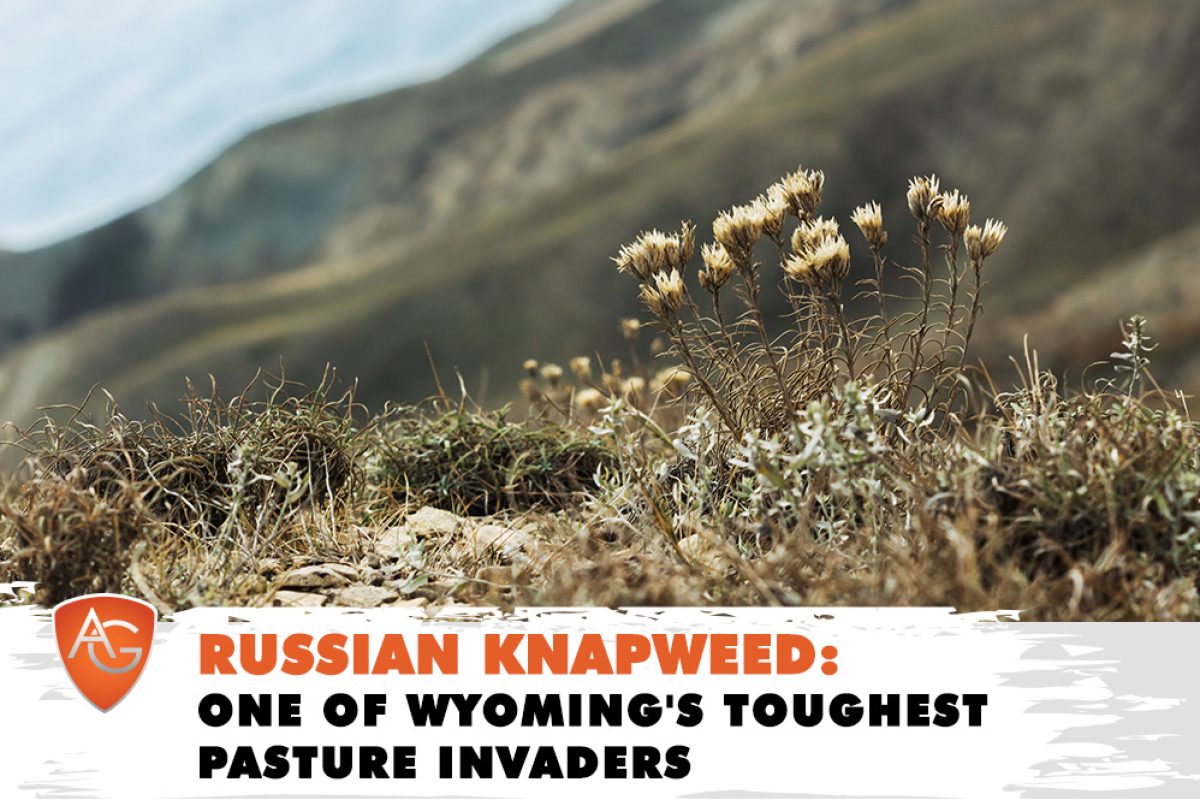
Overview: Learn how Russian knapweed impacts Wyoming pastures, reduces forage quality, and threatens grazing productivity across ranch operations!
Some pasture weeds are frustrating. Russian knapweed is something else entirely. Across Wyoming, this aggressive invasive plant has become one of the toughest long-term threats to healthy grazing ground. Once it gains a foothold, it spreads aggressively, competes hard against desirable forage, and becomes extremely difficult to remove completely.
For ranchers in Laramie County, Russian knapweed is more than a weed problem but a pasture productivity problem. Left unmanaged, it can quietly reduce grazing quality, weaken forage stands, and create long-term stress across an operation.
At All Around Ag, we know that healthy pasture starts with paying attention early. Russian knapweed is one of those weeds that rewards quick action and punishes delay.
What is Russian Knapweed?
Russian knapweed is a deep-rooted perennial weed known for its aggressive spread and ability to dominate pastureland. It grows in dense patches and competes directly with grass and forage plants for water and nutrients.
Why is Russian knapweed so difficult to control?
Unlike many weeds, Russian knapweed spreads through:
-
Extensive underground root systems
-
Aggressive regrowth
-
Long-term soil persistence
-
Rapid expansion into stressed pasture areas
Even small patches can become major infestations if left untreated.
Why Wyoming pastures are vulnerable
Dry conditions, overgrazing, and weakened forage create ideal conditions for Russian knapweed to spread throughout grazing land.
How Does Russian Knapweed Affect Grazing Areas?
Russian knapweed reduces both the quantity and quality of usable forage. Dense infestations crowd out healthy grass and make large sections of pasture less productive.
Common pasture problems caused by Russian knapweed
Infestations often lead to:
-
Reduced grazing access
-
Declining forage density
-
Uneven pasture use
-
Increased pressure on healthy grazing areas
As the weed spreads, desirable forage struggles to compete.
Why cattle avoid infested areas
Livestock generally avoid heavy knapweed patches because forage quality declines and grazing becomes less appealing.
Can Russian Knapweed Harm Livestock?
Yes, especially over time.
Why livestock exposure matters
Russian knapweed is considered toxic to horses and can create health concerns when consumed in significant amounts. While cattle tend to avoid it, heavy infestations reduce overall pasture quality and grazing efficiency.
Poor forage forces harder grazing decisions
When healthy pasture becomes limited, livestock may be pushed into lower-quality grazing conditions, increasing stress across the herd.
Why Does Russian Knapweed Spread So Aggressively?
Russian knapweed thrives where pasture health weakens. It takes advantage of stressed ground faster than many forage species can recover.
Conditions that encourage Russian knapweed
Common contributing factors include:
-
Overgrazing
-
Bare soil exposure
-
Weak forage competition
-
Poor pasture recovery periods
-
Repeated grazing pressure on the same areas
Once established, the plant’s deep roots make it highly resilient. Dense forage growth naturally limits open ground where invasive weeds can establish and spread.
How Can Ranchers Manage Russian Knapweed?
Managing Russian knapweed requires patience and consistency. Quick fixes rarely solve the problem completely.
Effective management strategies
Long-term control often includes:
-
Early identification and monitoring
-
Improving pasture health
-
Rotational grazing practices
-
Targeted treatment approaches when necessary
-
Preventing seed spread and expansion
The goal is not just removing visible weeds but strengthening the pasture around them.
Why long-term pasture management matters
Healthy grazing systems recover faster and compete more effectively against invasive species over time.
How Does Russian Knapweed Affect Winter Feeding Later?
Weed pressure during grazing season often leads to heavier hay dependence later in the year.
When knapweed limits forage:
-
Grazing seasons shorten
-
Hay feeding begins earlier
-
Supplemental feed costs increase
-
Pasture recovery becomes harder
Protecting pasture quality today helps preserve winter feed efficiency later.
Strong forage reduces long-term pressure
Healthy pasture allows ranchers to rely less heavily on stored feed like Timothy grass, orchard mixes, cow hay, or alfalfa during transitional seasons.
Frequently Asked Questions (FAQs)
1. Why is Russian knapweed dangerous for pastures?
It spreads aggressively, crowds out healthy forage, and reduces overall grazing productivity.
2. Can livestock eat Russian knapweed?
Livestock usually avoid it, but heavy infestations reduce forage quality and can create health concerns for horses.
3. How can ranchers prevent Russian knapweed from spreading?
Healthy pasture management, rotational grazing, and early weed monitoring help reduce spread.
In Summary
Russian knapweed is one of Wyoming’s toughest pasture invaders because it targets weak ground and spreads aggressively once established. But healthy pasture management, early awareness, and consistent action can help limit its impact over time.
At All Around Ag, we believe strong grazing ground supports strong livestock operations. Protecting your pasture from invasive weeds today helps preserve forage quality, improve grazing efficiency, and support healthier land for seasons to come.