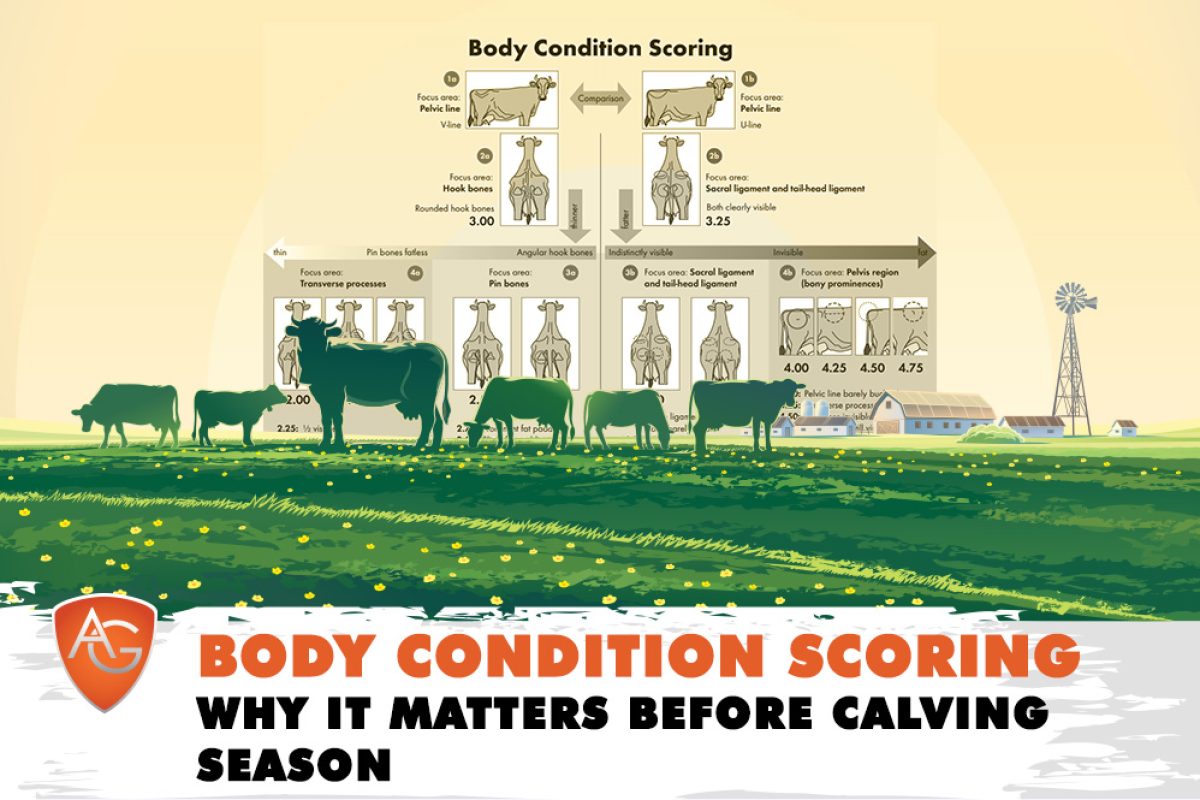
Overview: As calving season approaches in Wyoming, preparation becomes more focused. Equipment gets checked. Feeding plans are tightened up. Pastures are evaluated. But one of the most important tools a rancher has going into calving isn’t found in the barn — it’s found in observation.
Body Condition Scoring (BCS) is one of the simplest and most reliable ways to predict how cows will perform during calving and breeding. It tells you whether your winter feeding program is working and whether adjustments need to be made before it’s too late.
At All Around Ag, we believe strong calves and smooth calving seasons start long before the first calf hits the ground. They start with cows in the right condition.
What Is Body Condition Scoring?
Body Condition Scoring is a visual and hands-on assessment of fat cover and overall energy reserves. Most beef cattle are scored on a scale of 1 to 9:
-
1–3: Thin, poor condition
-
4–5: Moderate, acceptable condition
-
6–7: Good condition
-
8–9: Overconditioned
For most spring-calving herds, the target going into calving is a BCS of 5 to 6.
Cows in this range have enough energy reserves to support calving, milk production, and early re-breeding without excessive feed costs.
Also Read >> Body Condition Scoring as a Tool for Dairy Herd Management
Why Body Condition Matters Before Calving
Winter feeding isn’t just about keeping cows alive — it’s about maintaining the right condition so they can perform when it counts.
Cows entering calving season too thin are more likely to experience:
-
Calving difficulty
-
Reduced milk production
-
Weaker calves
-
Delayed return to estrus
-
Lower conception rates
Thin cows require significantly more feed after calving to regain condition — which increases costs just when grass may not yet be available.
On the other hand, cows that are properly conditioned:
-
Calve more smoothly
-
Produce stronger, more vigorous calves
-
Transition into breeding season more efficiently
-
Maintain better overall herd performance
Body condition is directly tied to profitability.
Winter Feeding’s Direct Impact on BCS
The condition your cows carry into calving reflects the quality and timing of winter feeding.
Cold weather increases energy demand. If rations weren’t adjusted during subzero stretches, cows may have quietly lost condition even if hay was available.
Hay types that help maintain condition include:
-
Straight alfalfa or cow alfalfa for energy and protein
-
Orchard/alfalfa mixes for balanced nutrition
-
Wyoming Timothy/Garrison or North Park Timothy Grass for steady roughage
Relying too heavily on lower-energy forage like cow hay or corn stalk rounds without supplementation can leave cows short on reserves by late winter.
When to Score and Adjust
The ideal time to evaluate body condition is 60–90 days before calving. That window allows enough time to make meaningful adjustments.
Waiting until calving begins limits your ability to improve outcomes. Once a cow calves thin, rebuilding condition takes far more feed and effort.
Early scoring allows you to:
-
Separate thin cows
-
Increase energy where needed
-
Adjust feeding groups
-
Improve overall herd uniformity
Small changes made early prevent larger problems later.
Consistency Across the Herd Matters
Uniform condition across the herd simplifies management. Wide variation makes feeding inefficient and increases stress during calving.
Heifers, older cows, and timid animals often fall behind first. Monitoring them closely ensures they don’t enter calving at a disadvantage.
Frequently Asked Questions (FAQs)
1. What body condition score should cows have before calving?
Most cows should be at a BCS of 5 to 6 going into calving season.
2. Can cows gain enough condition in late winter?
Yes, but it requires early action. Adjusting rations 60–90 days before calving is ideal.
3. Does body condition affect rebreeding?
Yes. Cows in proper condition return to estrus sooner and maintain stronger conception rates.
Strong Calves Start With Conditioned Cows
Calving season reflects months of preparation. Cows that carry the right condition handle stress better, support calf vigor, and transition into spring grazing more smoothly.
At All Around Ag, we understand that winter feeding decisions show up in spring results. Supplying dependable hay options — from alfalfa to Timothy and balanced mixes helps ranchers maintain the condition their herd needs before calving season arrives.