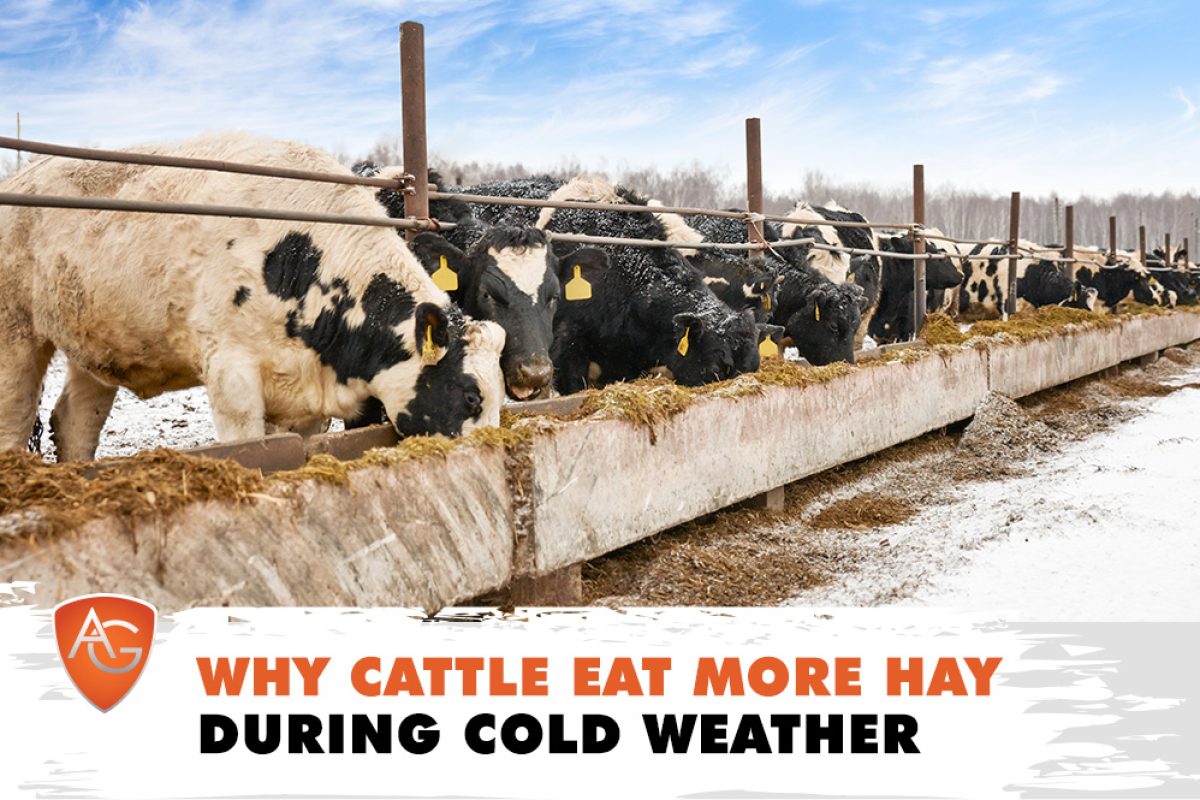
Overview: Cold weather increases cattle energy needs. Learn why hay intake rises in winter and how to plan feeding strategies that protect herd condition!
Every winter, ranchers across Wyoming notice the same thing — the hay stack shrinks faster as temperatures drop. It’s not waste, and it’s not bad management. It’s biology. Cold weather changes how cattle use energy, and hay becomes their primary fuel source when pastures go dormant and the wind cuts across open ground.
Understanding why cattle eat more hay during cold weather helps ranchers plan better rations, protect body condition, and avoid running short before spring. At All Around Ag, we see this pattern every year, and it always comes back to one simple truth: cold increases demand.
Cold Weather Raises Energy Requirements
Cattle maintain a steady internal temperature. When outside temperatures drop below their comfort zone, they must burn additional energy to stay warm. That energy comes from feed.
A cow standing in 40°F weather with little wind may maintain her condition on a moderate ration. That same cow facing single-digit temperatures and wind chill can require 20–30% more energy just to hold weight.
If the ration doesn’t meet that demand, cattle instinctively increase intake. That’s why hay disappears faster in December and January than it does in fall.
Forage Digestion Creates Heat
Hay isn’t just nutrition but a heating system. When cattle digest fiber, microbial activity in the rumen produces heat. This process helps cattle stay warm from the inside out.
That’s why roughage matters so much in winter feeding programs.
Hay types that support this process include:
-
Wyoming Timothy/Garrison
-
North Park Timothy Grass
-
Orchard/Brome/Timothy mixes
-
Grass and mix bales
These forages keep rumen function steady, allowing cattle to generate warmth naturally. When temperatures fall, cattle seek more forage to fuel that internal heat production.
Wind Chill Accelerates Hay Consumption
Wind is one of the biggest drivers of increased hay intake. Even moderate temperatures become challenging when wind strips heat from the animal’s body.
In Laramie County, wind chill often pushes cattle below their lower critical temperature, forcing them to burn calories faster than expected. When that happens, cattle compensate by eating more.
If higher-energy hay isn’t available, they’ll consume larger volumes of lower-energy forage, which can drain a hay stack quickly without fully meeting nutritional needs.
Also Read >> Winter Hay Supplies Getting Low? Consider Limit-Feeding Grain to Your Beef Cows
Body Condition and Stage of Production Matter
Not all cattle respond to cold the same way. Thin cattle, older cows, first-calf heifers, and late-gestation cows all require more energy in winter.
As cattle approach calving, their nutritional demands rise. When cold weather overlaps with late pregnancy, hay intake increases even more.
This is when adding:
-
Straight alfalfa
-
Cow alfalfa
-
Orchard/alfalfa mixes
can help meet energy needs without relying solely on volume.
Water Access Influences Hay Intake
Cattle can’t eat without water. Cold weather that limits water access reduces feed intake, but once water is restored, cattle often compensate by eating more hay.
Frozen tanks, long walks to water, or ice-covered troughs all disrupt intake patterns. When water access improves, cattle increase consumption to catch up, which can create sudden drops in hay inventory.
Consistent water access stabilizes feeding behavior and supports efficient hay use.
Higher Intake Isn’t a Problem; It’s a Signal
Increased hay consumption during cold weather isn’t a failure but feedback. It tells you cattle are responding appropriately to environmental stress.
The key is making sure what they’re eating matches the demand.
If cattle are eating more but still losing condition, it’s a sign that energy density needs adjustment. Feeding more of the right hay often slows overall usage by improving efficiency.
Frequently Asked questions (FAQs)
1. How much more hay do cattle eat in cold weather?
Most herds consume 20–30% more hay during extended cold and wind chill periods.
2. Does feeding higher-quality hay reduce total intake?
Often, yes. Energy-dense hay like alfalfa can meet needs more efficiently, reducing overconsumption.
3. Should feeding times change in winter?
Feeding later in the day or splitting feedings helps cattle generate heat overnight.
Plan for Higher Winter Consumption
Successful winter feeding plans anticipate increased hay use. January and February often account for the highest consumption of the entire year.
At All Around Ag, we help ranchers prepare with dependable hay options — from grass and Timothy hays to alfalfa and balanced mixes, so cold weather doesn’t catch them off guard.
When you understand why cattle eat more in winter, you can feed with confidence, protect your herd, and finish the season strong.