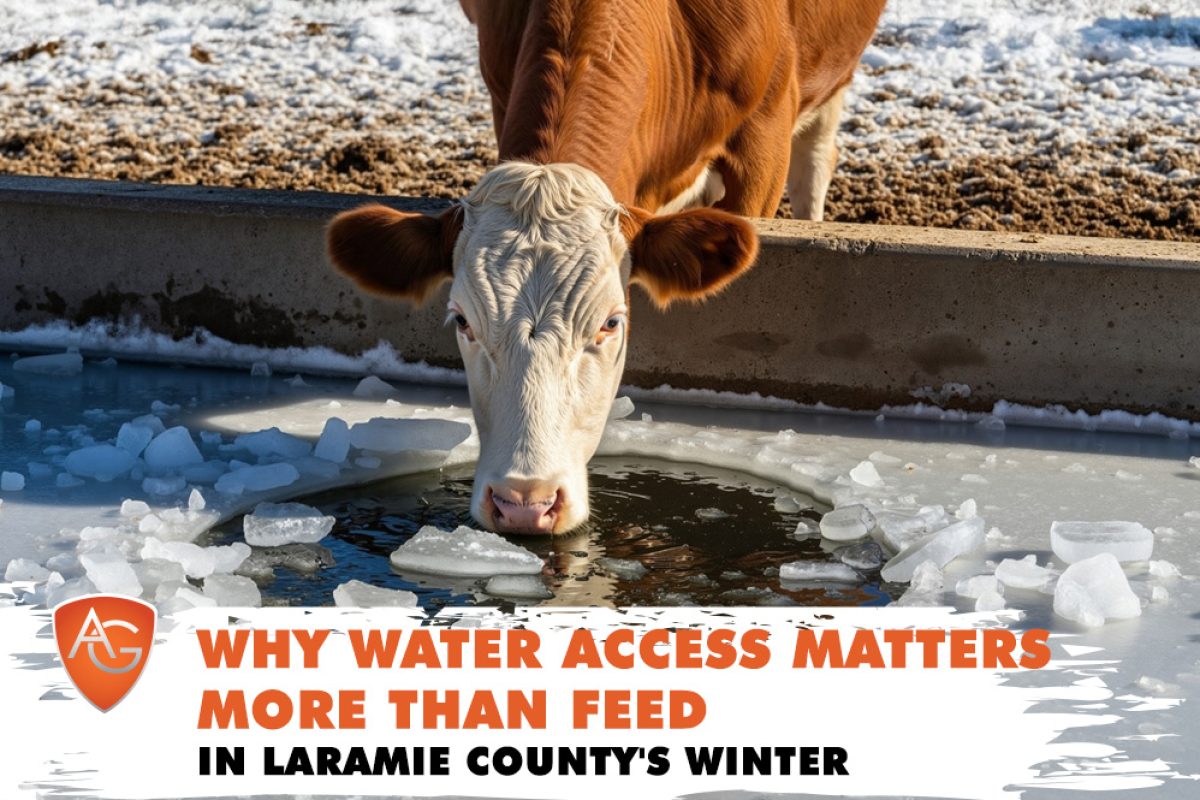
Overview: In Laramie County winters, water access drives feed intake. Learn why frozen tanks and wind chill matter more than hay quality alone!
When winter tightens its grip on Laramie County, most ranchers think first about feed. Hay stacks get measured. Rations get adjusted. Protein and energy are carefully planned. But there’s one piece of the winter puzzle that quietly determines whether all that planning pays off — water access.
In the coldest months, water becomes the gatekeeper to everything else. Without consistent access to clean, unfrozen water, cattle simply will not eat the way they should. Even the best hay program can fail if water is limited, frozen, or difficult to reach.
At All Around Ag, we’ve seen it year after year: when water struggles, feed efficiency drops fast.
Water Drives Feed Intake; Not the Other Way Around
Cattle need water to digest forage. On average, they require two gallons of water for every pound of dry matter they consume. When water intake drops, feed intake follows almost immediately.
In winter, frozen tanks, iced-over troughs, and reduced flow can cut water consumption without ranchers realizing it. The result is often misread as a feed issue when the real problem is hydration.
Common signs of poor winter water access include:
-
Cattle leaving hay behind
-
Slower consumption rates
-
Weight loss despite adequate feeding
-
Reduced rumen function
-
Lower overall performance
If cattle aren’t drinking enough, even high-quality alfalfa, Timothy grass, or orchard/alfalfa mixes won’t deliver the energy they’re meant to provide.
Cold Water Still Matters; Even When It’s Freezing
There’s a misconception that cattle don’t need as much water in winter. The truth is they need steady, reliable access, even when temperatures stay well below freezing.
Cold water slows intake, and iced-over tanks stop it entirely. When cattle struggle to access water, they conserve energy, which often means eating less.
Keeping water available may require:
-
Daily ice removal
-
Insulated tanks
-
Flow adjustments
-
Strategic placement near feeding areas
-
Monitoring lines during extreme cold
It’s not just about having water on the ranch but about making sure cattle can reach it easily, every single day.
Wind Chill Makes Water Access Even More Critical
Laramie County winters bring wind that changes everything. Wind chill increases energy demand, which increases feed requirements — and with that, water demand rises too.
Cattle burning more calories need more water to process that feed. If water intake can’t keep up, cattle back off hay just when they need it most.
This is why wind-exposed water sources often create problems. If cattle must walk long distances or stand in wind to drink, they’ll do it less often. That small hesitation can snowball into reduced intake and body condition loss.
Hay Quality Can’t Compensate for Poor Water Access
Many ranchers try to fix winter performance by upgrading hay, and while quality feed matters, it can’t overcome hydration problems.
You can feed:
-
Straight alfalfa
-
Cow alfalfa
-
Wyoming Timothy/Garrison
-
Orchard/Brome/Timothy mixes
-
Cow hay or corn stalk rounds
But without adequate water, cattle can’t fully utilize those nutrients. In fact, richer hay without water can sometimes create more digestive stress.
Water is the foundation. Feed builds on top of it.
Simple Water Management Protects the Entire Feeding Program
Strong winter water management helps:
-
Maintain consistent feed intake
-
Protect body condition
-
Improve feed efficiency
-
Reduce wasted hay
-
Support pregnant cows through late gestation
Ranchers who prioritize water access often find they need fewer emergency ration adjustments later in the winter.
Frequently Asked Questions (FAQs)
1. Do cattle really need as much water in winter?
Yes. While intake patterns change, cattle still need consistent access to digest feed and maintain body condition.
2. Why do cattle eat less when water is limited?
Water is required for rumen function. Without it, cattle reduce feed intake to avoid digestive stress.
3. Can higher-quality hay make up for water issues?
No. Even the best hay can’t be fully utilized without adequate water access.
Plan Water First, Then Feed
Winter feeding success in Laramie County doesn’t start with the hay stack — it starts with the tank. When water is accessible, cattle eat better, digest better, and handle cold with more resilience.
At All Around Ag, we believe strong winter programs are built from the ground up , starting with water, followed by dependable hay that fits your operation. When both work together, winter becomes manageable instead of stressful.