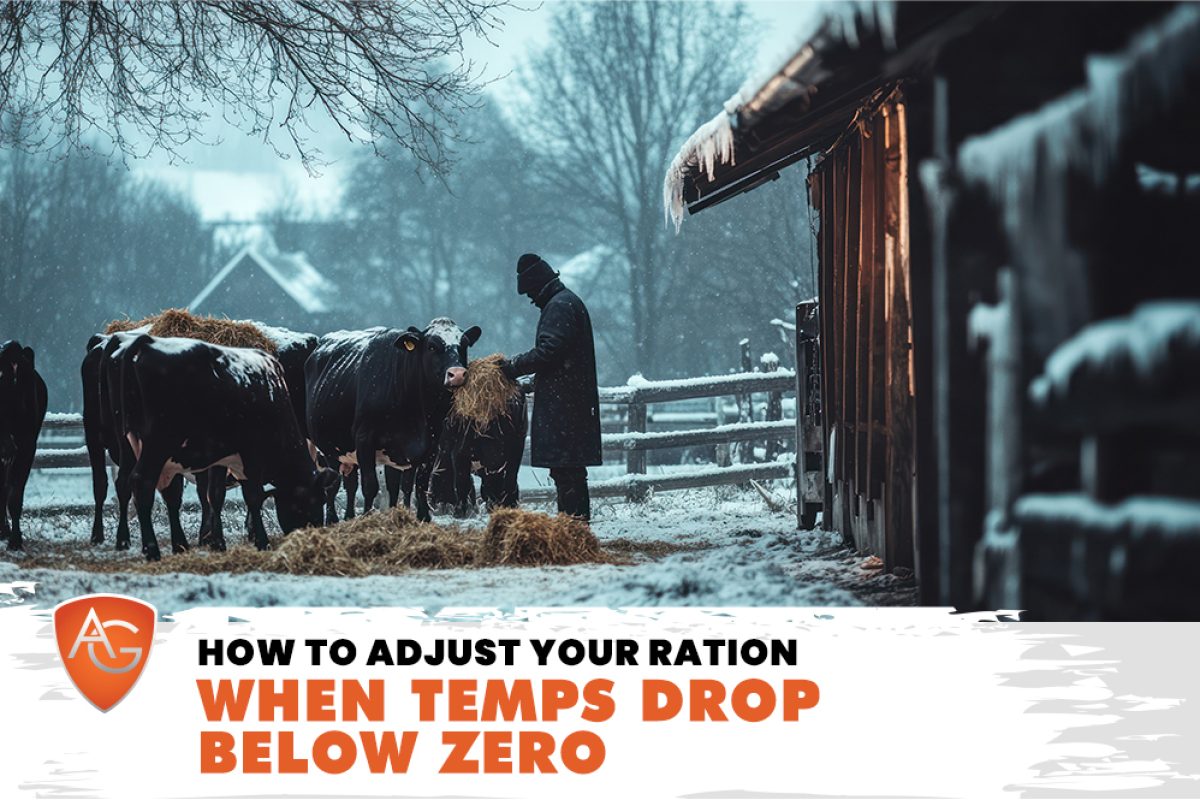
Overview: Learn how to adjust cattle rations during subzero temperatures. Discover energy needs, hay choices, and feeding strategies that protect herd condition in extreme cold!
When temperatures fall below zero in Wyoming, livestock nutrition becomes more than a daily chore; it becomes a safeguard for herd health, body condition, and long-term performance. Cold is one thing; subzero cold is another. At that point, every animal in your place burns energy at a rapid pace just to stay warm. If your ration doesn’t rise to meet those demands, weight loss, stressed cattle, and compromised calving outcomes follow quickly.
At All Around Ag, we work directly with ranchers who see these challenges every winter. Below-zero stretches aren’t the time to simply “feed more.” They’re the time to feed smarter, with the right hay, the right balance, and the right timing.
Why Subzero Temps Change Everything
A cow’s lower critical temperature — the point where she must burn extra energy to maintain body heat is around 32°F for a dry winter coat. Once wind or moisture enter the picture, that number rises even higher. When temps fall below zero, cattle can require 30–40% more energy than they need on a normal winter day.
This increased energy demand doesn’t politely announce itself. It shows up as:
-
Faster hay disappearance
-
Noticeable weight loss
-
Cattle crowding windbreaks
-
Higher breathing rates
-
Lower feed efficiency
If your ration doesn’t rise to the occasion early, you spend the next 60 days trying to regain what was lost in one week of extreme cold.
Related Reading >> Keeping Livestock Warm During Extreme Winter Cold
Start With Energy: The Foundation of Subzero Feeding
Energy is the first nutrient to consider when conditions turn harsh. Cattle need fuel — and a lot of it to generate warmth from the inside out.
Alfalfa: Your Fastest Energy Bump : Straight alfalfa or cow alfalfa adds the quick energy cattle need during a cold snap. It’s especially useful when paired with a base ration of grass hay, cow hay, or a Timothy/Brome mix.
Grass Mixes: Your Steady Roughage Base : Hay like Wyoming Timothy/Garrison, North Park Timothy, or an orchard/brome/timothy mix provides essential fiber for rumen function. That fiber is what helps cattle create internal heat.
Cow Hay & Corn Stalk Rounds : These work well as everyday roughage but may fall short in subzero conditions unless supported with an energy source like alfalfa.
Orchard/Alfalfa Mix : A balanced option for herds that need both energy and high-quality forage without swinging too far in one direction.
Increase Total Intake — But Do It With Purpose
When temps drop below zero, cattle need more pounds of forage overall. But not every pound offers the same return.
A good rule of thumb: Increase total dry matter intake by 10–20%, depending on age, stage of pregnancy, body condition, and wind exposure.
That increase should come from:
-
Adding a second feeding
-
Offering a higher-quality bale during the coldest stretch
-
Moving from moderate hay to a higher-energy option
-
Ensuring cattle have wind protection so feed energy isn’t wasted
Don’t Forget Protein — It Drives the Engine
Protein is essential for rumen microbes, and healthy microbes keep cattle warm. If your ration becomes too low in protein, cattle won’t digest fiber efficiently, which means their internal “heater” begins to fail.
Straight alfalfa, cow alfalfa, or orchard/alfalfa mixes help keep protein levels where they need to be during extended subzero weather.
Timing Matters More Than Ranchers Realize
Feeding once a day may work until deep winter hits. When temps are below zero, cattle benefit from more consistent energy availability.
Consider:
-
Feeding late afternoon or evening so their peak rumen activity — and heat production — occurs overnight
-
Splitting rations so cattle aren’t empty for long stretches
-
Keeping water accessible, since low intake equals low performance
Frozen tanks undo even the best ration adjustments.
Body Condition Going Into the Cold Determines Who Struggles
Thin cows struggle the most during cold weather because they lack insulation and have fewer reserves. Heifers and older cows may also fall behind if rations aren’t adjusted quickly.
If a cold snap is forecast, prepare early:
-
Bring in higher-quality hay
-
Increase feeding frequency
-
Monitor timid or lower-ranking cattle
Winter feeding is as much about observation as it is planning.
Also Read >> 6 Essentials to Keep Cattle Healthy & Happy Through Wyoming Winters
Frequently Asked Questions (FAQs)
1. How much more should I feed when temps drop below zero?
Most cattle need 10–20% more forage, plus a boost in energy from options like straight alfalfa or orchard/alfalfa mixes.
2. What type of hay is best in extreme cold?
Alfalfa provides fast energy, while Timothy, orchard, and grass mixes supply the roughage needed for steady rumen heat production.
3. Should I change feeding times during a cold snap?
Yes. Feeding later in the day or splitting feedings helps cattle stay warm overnight and maintain steady energy levels.
Set Yourself Up for Success
Subzero weather is part of ranching life here, but the impact it has on your herd doesn’t have to be devastating. When your ration meets the weather head-on with the right hay, the right energy levels, and the right timing — cattle maintain condition, handle the cold with resilience, and stay on track for calving.
All Around Ag is here to supply the hay your winter program depends on, from high-quality alfalfa to dependable Timothy, orchard mixes, and cow hay that keeps your herd steady through the toughest stretches.