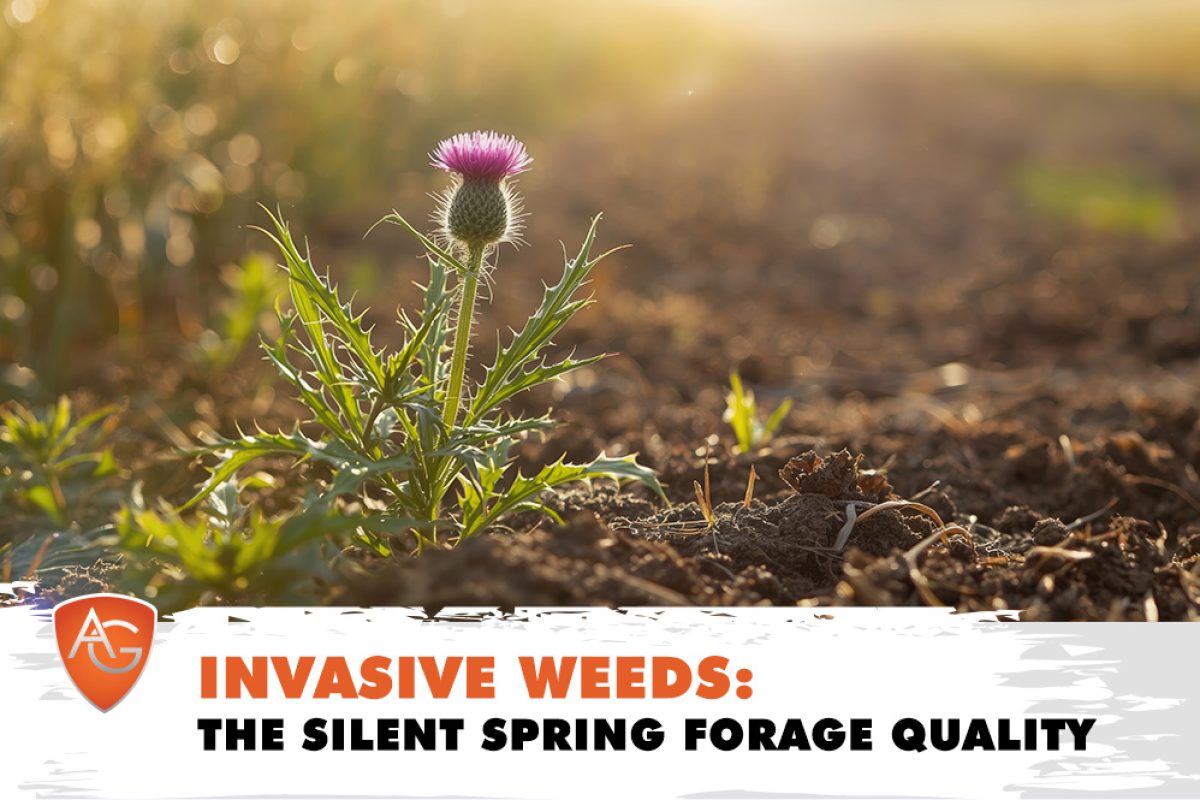
Overview: Invasive weeds quietly reduce spring forage quality. Learn how they spread, what signs to watch for, and how to protect pasture performance!
Spring pasture growth doesn’t fail overnight. More often, it slips quietly backward; thinner stands, lower-quality forage, uneven grazing, and less weight gain than expected. One of the biggest reasons ranchers see this slow decline is invasive weeds.
Invasive weeds don’t announce themselves loudly. They don’t always take over an entire pasture at once. Instead, they chip away at forage quality season after season, reducing productivity long before the damage feels urgent. By the time spring turnout arrives, the opportunity for quality grazing may already be compromised.
At All Around Ag, we see how invasive weeds quietly reshape pastures across Laramie County, and how early awareness makes all the difference.
Why Invasive Weeds Hurt More Than You Think
Invasive weeds compete directly with desirable forage species for sunlight, moisture, and nutrients. When weeds gain ground, grass and legumes lose strength, root depth, and recovery ability.
The real damage shows up in spring, when pastures should be thriving. Instead, ranchers may notice:
-
Lower forage density
-
Uneven green-up
-
Reduced grazing days
-
Cattle selectively avoiding areas
-
Declining pasture performance year after year
What looks like a “rough spring” is often the result of weeds that went unchecked the previous season.
Also Read >> What Are Invasive Plants & Why Are They Bad?
Winter and Early Spring Reveal the Problem
One of the best times to identify invasive weeds is late winter or early spring, before pasture growth masks them again. Dormant forage makes weed stems, seed heads, and rosettes easier to spot.
Watch for:
-
Dense patches where grass failed to return
-
Tall, rigid stalks from last season
-
Areas cattle consistently avoided
-
Thin ground vulnerable to erosion
These are clear signals that weeds have already gained a foothold and will impact spring forage quality if left unmanaged.
Weeds Reduce Both Quantity and Quality
Even when pastures appear green, invasive weeds lower nutritional value. Many are unpalatable or low in energy and protein, forcing cattle to graze around them.
This leads to:
-
Overgrazing of desirable forage
-
Faster pasture fatigue
-
Increased reliance on hay earlier in the season
-
Reduced weight gain and performance
The result is a pasture that looks productive but doesn’t deliver the feed value your herd needs.
Invasive Weeds Thrive on Stress
Weeds don’t spread randomly. They take advantage of stressed pastures.
Common stress factors include:
-
Overgrazing
-
Poor rest periods
-
Compacted soil
-
Bare ground from winter feeding
-
Uneven nutrient distribution
Once weeds establish, they’re difficult to displace without addressing the underlying issue. Control efforts work best when paired with better grazing management and pasture recovery.
Spring Is Too Late to Ignore the Warning Signs
By the time invasive weeds fully emerge in spring, much of the damage is already done. Early planning allows ranchers to protect forage quality before grazing pressure increases.
Effective prevention starts with:
-
Identifying problem areas early
-
Improving rest and rotation strategies
-
Managing winter feeding locations
-
Supporting strong forage recovery
-
Preventing seed production
Healthy, competitive pastures are the best defense against invasive weeds.
Frequently Asked Questions (FAQs)
1. Why are invasive weeds such a problem for spring pastures?
They compete with forage for nutrients and space, reducing both pasture quantity and feed quality.
2. When is the best time to spot invasive weeds?
Late winter and early spring make weeds easier to identify before forage growth hides them.
3. Can good grazing management help control weeds?
Yes. Proper rest, rotation, and pasture recovery improve forage competitiveness and reduce weed pressure.
Quiet Problems Need Early Attention
Invasive weeds are called “silent” for a reason. They don’t cause immediate collapse — they cause gradual loss. Ranchers who recognize the signs early can preserve pasture performance, reduce feed costs, and set themselves up for a stronger grazing season.
At All Around Ag, we believe healthy land supports healthy livestock. Paying attention to invasive weeds now protects the forage your operation depends on tomorrow.